
Why Backup Cards and Smart-Card Wallets Are Actually Better Than Your Paper Seed
13 augustus, 2025
Okay, so check this out—I’ve been fiddling with cold storage options for years. Wow, the options keep multiplying. My instinct said paper seeds were fragile, and that feeling stuck. Initially I thought paper was fine, but then a couple small disasters changed my mind. On one hand paper is simple, though actually it fails in too many real-world ways for most people.
Really? Yes, really. The problem starts with durability. A seed phrase on paper hates water, fire, kids, and time. You can laminate it, sure, but that creates other issues—like misplacing an indestructible scrap of paper. I’m biased, but I prefer hardware-first approaches. Something somethin’ about a physical device just feels smarter. Hmm… personal bias showing here.
Here’s the thing. Smart-card wallets and backup cards solve multiple failure modes at once. They replace fragile mnemonic plans with tamper-resistant, easy-to-store pieces of tech. My first impression when I tried one was: why didn’t I do this sooner? Then I spent a week testing real failures—printer ink fading, spilled coffee, a neighbor’s dog. Not fun. So I pivoted from theory to practice and learned a lot.
Whoa. Small devices. Big impact. Security changes when you reduce human error points. A backup card that stores keys or supports seed alternatives can be tucked in a safe deposit box, or even split across multiple locations. That last bit matters. Splitting backups sounds nerdy, but it’s practical—especially if you travel or are risk-averse.
Slow down for a second—let me explain how these cards work in plain English. Most smart-card wallets isolate private keys in a secure element and never expose them to the host device. Medium-tech stuff, but elegant. You sign transactions with the card. The private key doesn’t have to be written down or typed into a phone. That reduces attack surface dramatically, though some trade-offs exist.
Why seed phrase alternatives matter
I’ll be honest—they’re not a panacea. On one hand they solve a lot of practical problems. On the other hand, you trade off universal recovery simplicity for hardware dependencies. Initially I thought that dependency was a downside, but then I realized manufacturers are building resilient ecosystems around these cards. For me the question became: do I want a single fragile mnemonic, or a resilient network of physical backups?
Something felt off about trusting a single piece of paper. Also, paper relies on human memory and discipline. Backups like smart-cards enforce better habits by design. Seriously? Yes—habits matter. A tangible card is easier to inventory and protect. And when the card is built around secure hardware, the risk of trivial theft or phishing drops fast.
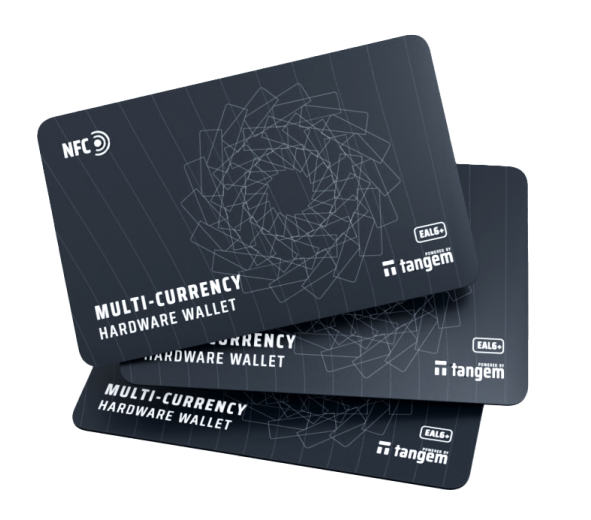
Check this out—tangem cards exemplify this approach in a sleek form factor. They use a secure element and NFC to sign transactions, keeping keys off phones. I used one for months and it fit easily in my wallet alongside a credit card. It felt normal, not like carrying another geek gadget. That normality makes security more likely to be practiced, and that matters more than you think.
On one hand, hardware cards cost money. On the other hand, so does recovering from a lost seed. Recovery costs more than a card for many people, especially if the holdings are significant. My math isn’t perfect, but the expected value often favors card-based backups. Also—pro tip—buy from trusted vendors only. Counterfeits are a real issue.
There are multiple implementation patterns for backups. You can store a single root key on a card. You can split a seed across multiple cards using Shamir-like schemes. You can use a card as a signing device while storing a non-critical recovery elsewhere. Each pattern trades convenience and security differently. Initially I thought one approach would dominate, but actually they all have niches.
Hmm—this part bugs me. The UX of some wallets is still rough. Setup can be clunky. People trip over steps and then blame the concept instead of the implementation. A clear, simple onboarding flow makes all the difference. Manufacturers that nail ease-of-use will win casual users and reduce costly mistakes.
Let’s walk through a practical example. Imagine you hold a modest crypto portfolio and travel a lot. You want low overhead, high security, and portability. A smart-card in a slim metal credit-card holder lives in your passport wallet and a duplicate sits in a safe deposit box. If you need access, you carry an NFC-enabled phone or a compact reader. It’s not perfect, but it’s a lot better than a paper phrase kept in a sock drawer.
On the other hand, corporate or institutional setups need different patterns. They often require multisig schemes, redundancy across geographies, and auditability. Backup cards can plug into multisig, acting as one of several signers. I’ve seen teams adopt cards for key custody while retaining independent recovery policies. It scales nicely when done thoughtfully.
Actually, wait—let me rephrase that: cards are one tool in the toolbox.
Here’s a real-world snag that surprised me. People assume physical security equals infallible security. Wrong. Cards can be stolen, hidden, or damaged. So think in layers. Keep at least two independent backups in separate locations. Use tamper-evident packaging if that helps you sleep. And keep a secure, private record of device IDs or serials somewhere offline. Small operational details reduce failure odds sharply.
My hands-on testing found another pattern. People mix up seed alternatives with custodial services. They’re not the same. A hardware card keeps you non-custodial. Custodial services keep your keys—often in cold storage run by someone else. If you want full control, a smart-card is a better match. If you want convenience and are willing to trade control, custody may be fine. I prefer control, but I’m not evangelical about it.
There’s still risk in buying random devices. I cannot stress this enough—trust matters. Buy from known vendors, verify firmware, and check provenance. The supply chain is a real attack vector; attackers may try to swap hardware or insert backdoors. Manufacturers with transparent security audits are preferable. If you want a straightforward recommendation, search for cards with public audits and active developer communities.
Also—oh, and by the way—don’t neglect physical labeling. If you have multiple cards, label them in a way that doesn’t reveal the purpose. “Backup A” is safer than “Crypto Seed.” Small operational security steps like that reduce social-engineering risks.
One of my favorite parts about smart cards is recovery testing. Seriously—test your recovery plan. I once helped a friend simulate a lost-wallet event. The card-based recovery was smooth. The paper-based recovery required detective work and panicked calls. That experience converted him. Recovery drills reveal hidden assumptions and fix them before real emergencies. Do them.
I’m not 100% sure about every vendor’s claims, and that’s okay. The landscape evolves quickly. But the principles remain: isolate keys, reduce human error, and use multiple geographically separated backups. Use cards to make secure behaviors habitual. You’ll thank yourself later.
Alright, a few practical tips before you go. First, treat backup cards like cash—secure but accessible to you. Second, practice recovery at least once. Third, avoid sharing photos or screenshots of packaging or serial numbers. Fourth, keep one copy offsite. Fifth, consider devices that support Shamir or multisig if you need extra resilience.
I’m biased, again—but if you want a compact, user-friendly option with a good track record, check devices like tangem that blend simple UX with secure hardware. The link above will point you to more detail on that specific implementation. Use it as a starting point, not gospel.
FAQ
Q: Are backup cards better than writing down a seed?
A: For most modern users, yes. Backup cards reduce common human errors and add tamper-resistant protection. However, they introduce hardware dependence and require careful vendor selection.
Q: What happens if the card breaks or is lost?
A: Ideally you have multiple backups in separate secure locations. Use redundancy, test recovery procedures, and consider Shamir or multisig for high-value holdings.
Q: Can a smart-card be hacked remotely?
A: Direct remote compromise is difficult because private keys stay in the secure element. Network-level attacks target host devices and users instead. Good hygiene and firmware verification reduce risks further.